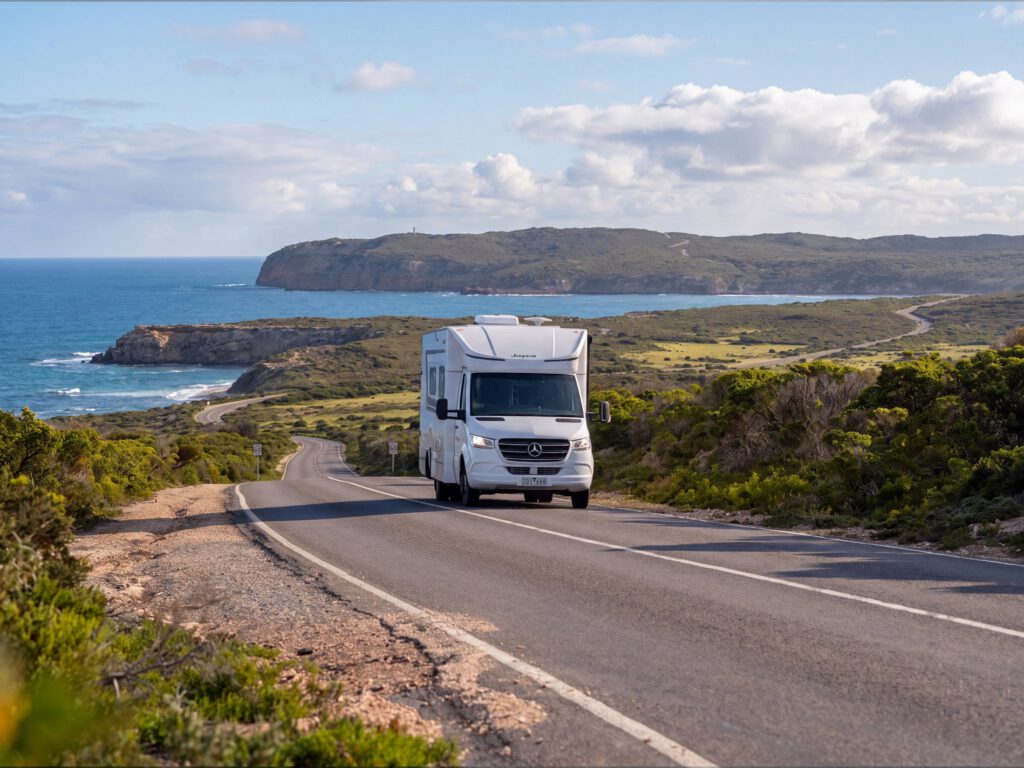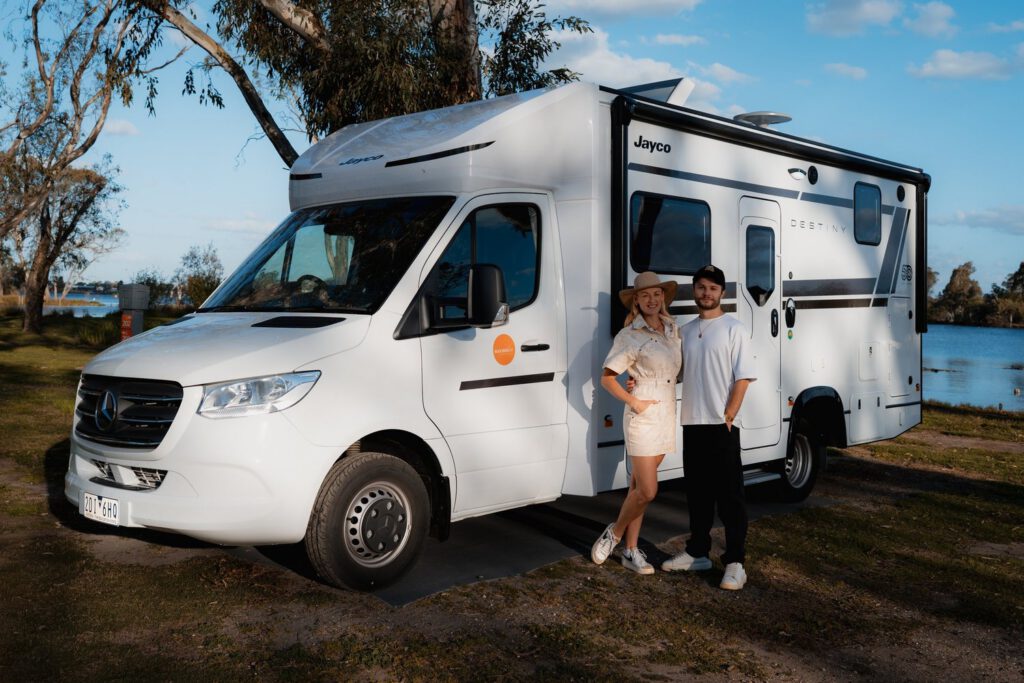
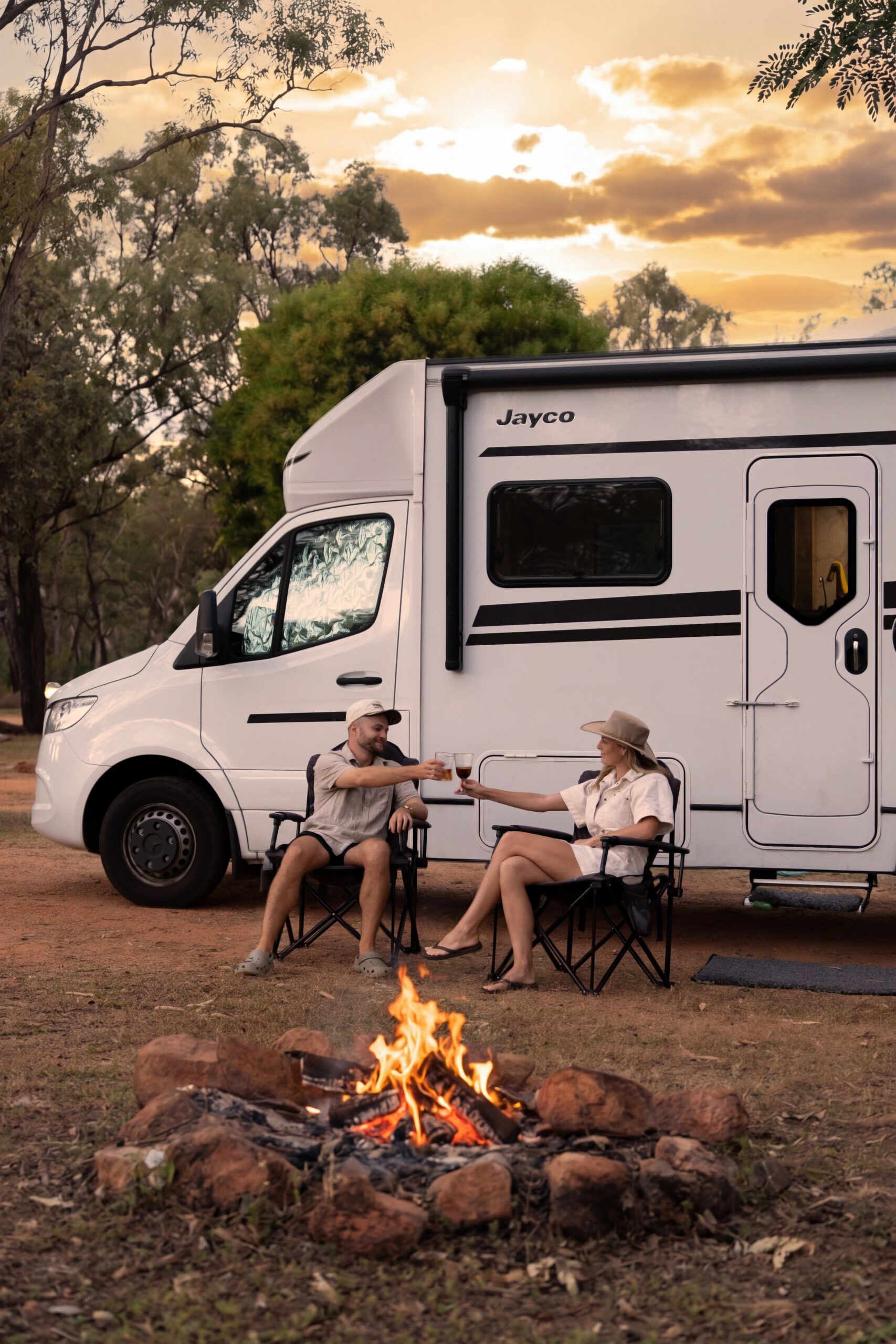
The best camps rarely come with a power pole. The quiet beach, the riverbank at the end of a dirt road, the station stay under a big sky: staying there means making your own power, carrying your own water and using less of both.
This guide explains how an off-grid motorhome setup fits together, piece by piece, so you can work out what you need before you spend anything. It is general advice, not a recommendation of any product.
What “off-grid” really means
Off-grid simply means camping without mains power, town water or a dump point at your site. Everything you use has to be made on board or carried in, and everything you produce has to be carried out.
How long you can stay comes down to four things: how much power you make, how much you can store, how much water you carry and how quickly you use them.
Solar: making your own power
Solar panels charge the house battery through a solar charge controller. How much they produce changes through the day and through the year: full summer sun is very different from a shaded winter camp.
- Roof-mounted panels work whenever the sun is out, with nothing to set up.
- Portable panels or a solar blanket let you park in the shade and put the panel in the sun.
- Shade matters more than most people expect. A branch across one corner of a panel can cut its output sharply.
- An MPPT controller is generally more efficient than a basic PWM one, particularly in cooler weather and when the panels are not at full output.
Batteries: storing it for the evening
The house battery runs your lights, fridge, water pump and chargers, and is separate from the battery that starts the engine. The two common types are lithium (usually lithium iron phosphate) and AGM. In general, lithium is lighter and lets you use more of its rated capacity, while AGM costs less up front.
Battery capacity is listed in amp-hours. Multiply it by the battery voltage to get watt-hours, which is easier to compare with what your appliances use. A 12 volt, 100 amp-hour battery holds about 1,200 watt-hours, and a 100 watt load running for five hours uses 500 of them.
Cold weather and lithium Lithium batteries generally should not be charged when they are below freezing. If you camp somewhere cold, choose one with low-temperature charging protection and read what the maker says.
| Power source | When it works | Good to know |
|---|---|---|
| Solar | Daylight hours, best in full sun | Shade and short winter days reduce it |
| Driving | Whenever the engine is running | A DC-DC charger tops up the house battery on travel days |
| Mains hook-up | At a powered site | Charges everything, whatever the weather |
Charging while you drive
Many modern vehicles have a smart alternator, which changes its voltage as it goes, and that does not suit charging a house battery directly. A DC-DC charger sits between the vehicle and the house battery and gives it the charge it needs, which is why one is the usual way to charge a lithium house battery on the road.
Inverters and what they can run
Most of a motorhome runs on 12 volts. An inverter turns battery power into 240 volts for household appliances. Anything that makes heat, such as a kettle, toaster, hair dryer or air conditioner, uses far more power than lights, fans or a laptop, so check the watts on the label before you plan around it.
Water and waste
Power is only half of it. Your fresh-water tank, grey-water tank and toilet cassette decide how long you can stay just as much as your battery does.
- Fill the fresh tank whenever you pass a tap signed as drinking water.
- Short showers and a washing-up tub make a tank last much longer.
- Empty grey water and the cassette only at a dump point.
- Water weighs about a kilogram a litre, so a full 100-litre tank adds roughly 100 kg. Keep an eye on your payload.
Everyday habits that stretch your power
- Charge phones, cameras and laptops while you drive.
- Cook on gas rather than electricity.
- Check the battery monitor morning and evening so nothing surprises you.
- In winter, park where the panels get the low sun.
Who should do the work
Plug-in gear and low-voltage 12 volt work can suit a careful do-it-yourselfer, but work on 240 volt wiring and on gas fittings is a job for a licensed electrician or gas fitter. Rules differ a little between states, so check yours. It is the safe choice whatever the rules say, and it also protects your insurance.
Is an off-grid setup worth it?
If you mostly stay in caravan parks, a basic setup is plenty. If the camps you dream about have no facilities at all, a well-matched system is what gets you there, and lets you stay. Start by working out what you actually use in a day, then size everything else around that.