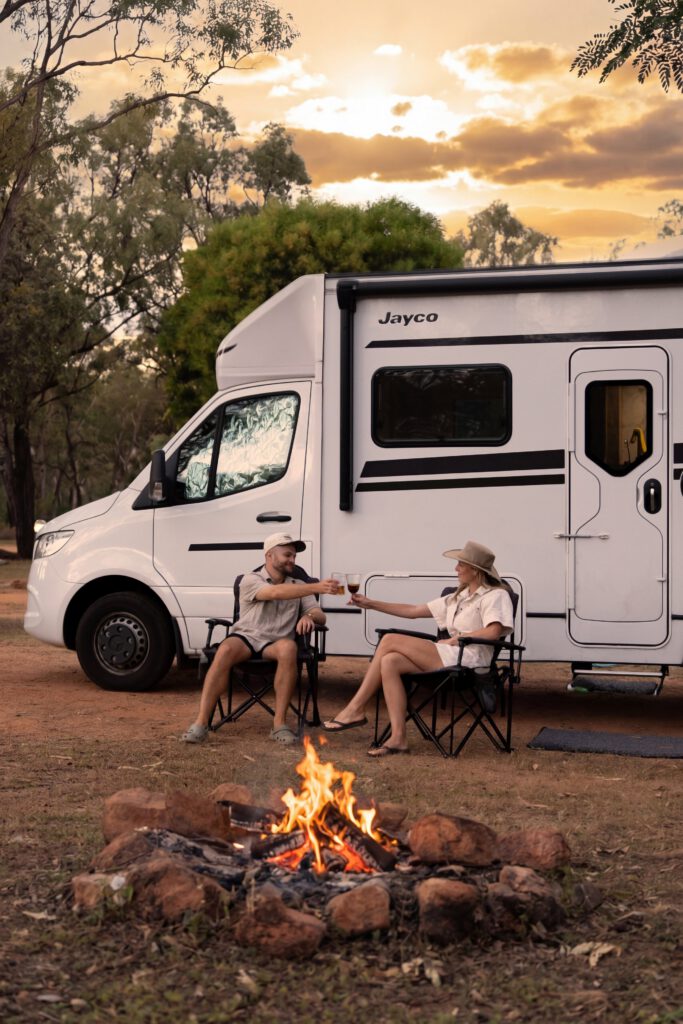
One night you are alone beside a river with nothing but a fire and the stars. The next you have a hot shower, a washing machine and a powered site. Both are part of travelling Australia, and most trips are better with a mix.
Here is what to expect from each, the rules worth knowing and how to choose. The rules change from state to state and council to council, so treat this as a starting point and always read the sign when you arrive.
What counts as free camping
Free camping covers roadside rest areas, council and community camps, and some forests and reserves. Some are truly free, while others ask for a donation or a small fee. Facilities range from a toilet and a bin to nothing at all.
It does not mean camping anywhere you like. Camp only where it is allowed, and not in town streets, public car parks or on beaches.
What a caravan park gives you
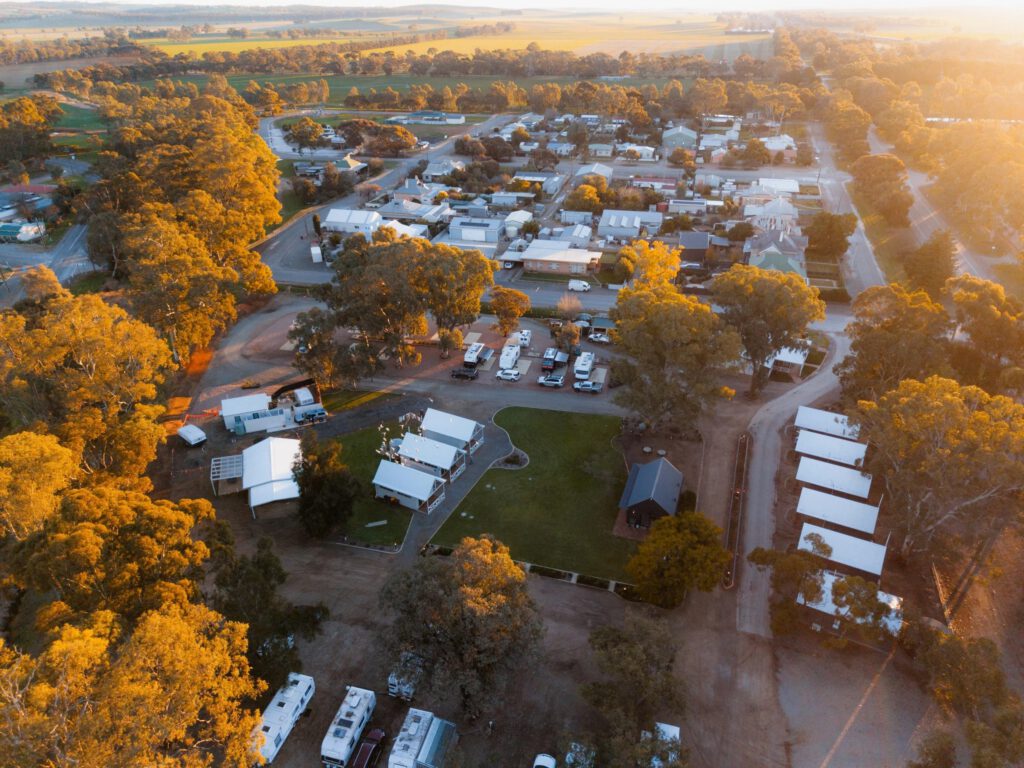
A caravan park is the easy option: a marked site, power and water if you want them, bathrooms, a laundry and somewhere to empty your tanks. Many also have a camp kitchen, and some have pools and playgrounds.
Side by side
| Free camps | Caravan parks | |
|---|---|---|
| Cost | Free, or by donation | Paid by the night |
| Power and water | Usually none | Powered and unpowered sites |
| Facilities | Sometimes a toilet, often nothing | Bathrooms, laundry, dump point |
| Booking | Mostly first come, first served | Can be booked ahead |
| How long you can stay | Often limited: check the signs | As long as you have booked |
Rules to know before you free camp
- Read the signs when you arrive. Stay limits vary from place to place, and some camps have none.
- Some camps are for self-contained vehicles only, meaning your vehicle carries its own toilet and waste water. Some councils ask for a certificate.
- In national parks, camp in the designated campgrounds, which usually have a fee and often need booking ahead.
- Check for fire bans before lighting a campfire, and use a gas cooker if you are unsure.
- Take all rubbish with you, and empty tanks only at a dump point.
- Rest areas are for a rest. Truck bays are for trucks.
Choosing a good spot
- Avoid camping under large gum branches, which can drop without warning.
- Stay out of dry creek beds and low ground if there is any chance of rain upstream.
- Arrive with daylight to spare, so you can see the ground and any signs.
- Leave the place as you found it, or cleaner.
How to choose
Think about what you need tonight. If the tanks are full, the batteries are charged and the weather is kind, a free camp is hard to beat. If you need power, a proper shower or a washing machine, book a park.
Parks along the coast and in popular areas can fill up in school holidays and on long weekends, so book those nights early. In quieter seasons you can often decide on the day.