Some links in this guide may be affiliate links, meaning we may earn a small commission at no additional cost to you. We only recommend places and experiences we genuinely enjoyed or believe would be useful for our readers.
We reversed our motorhome onto a ferry, had koalas in the trees a few metres from our campsite and found what might be our favourite national park yet. Kangaroo Island packed a lot in.
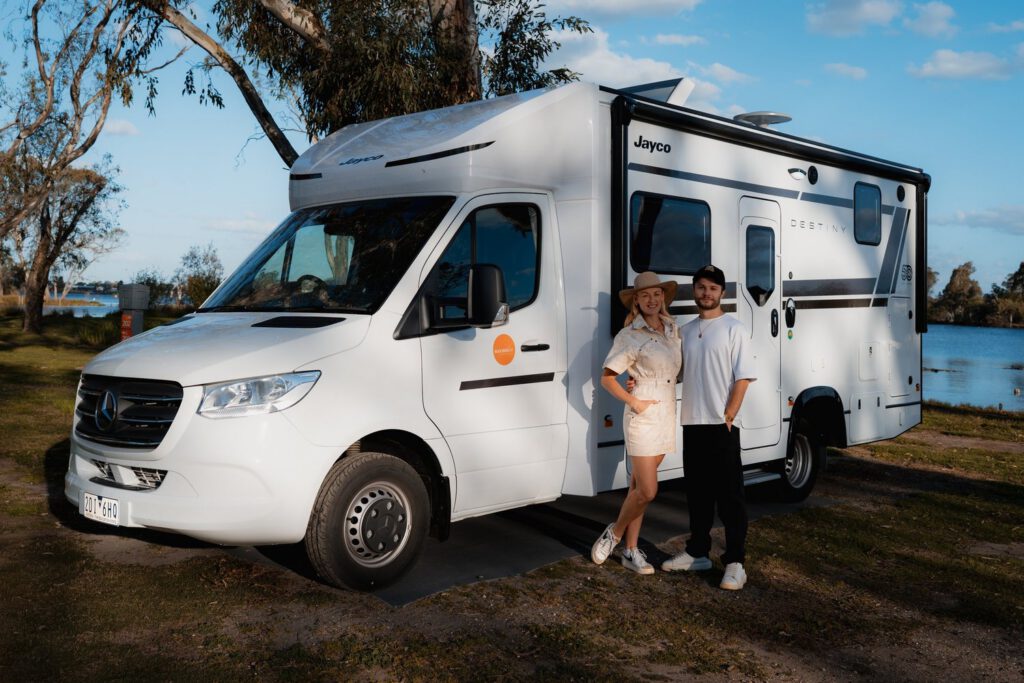
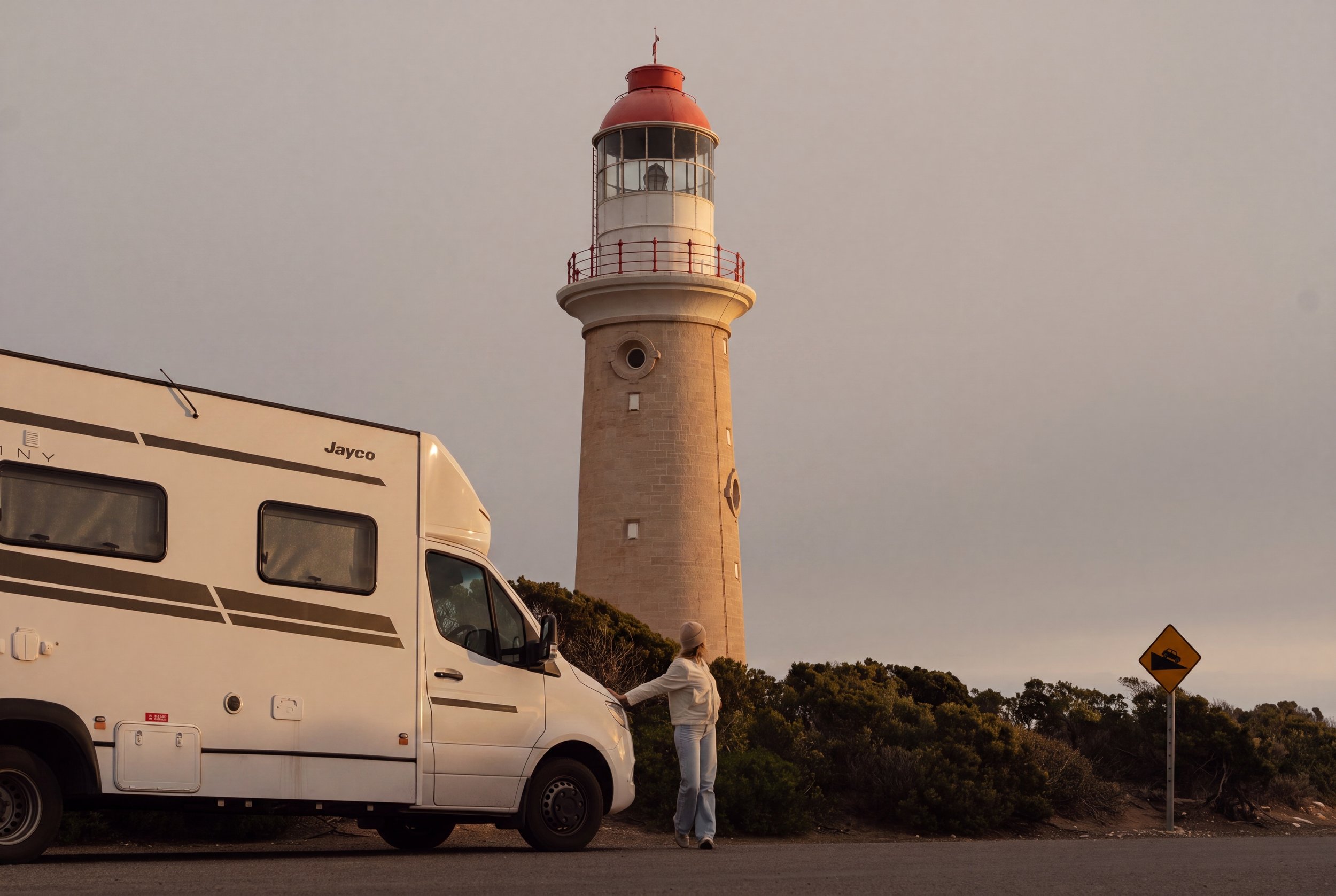
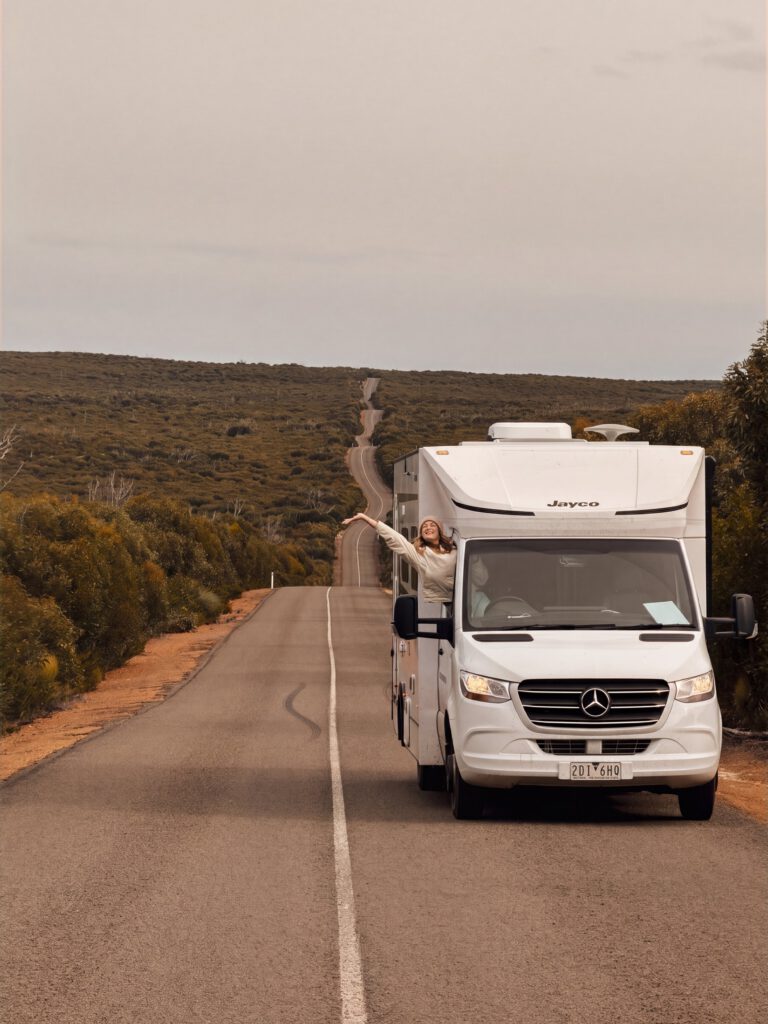
We travel Australia full-time in our Jayco motorhome, and we took it across from Cape Jervis to see the island properly: Penneshaw in the east, Flinders Chase out west and Seal Bay on the south coast.
Here’s what we’d tell a mate planning the same trip: how the ferry works with a bigger vehicle, how long you need, what we’d go back for and where we stayed. If we mention somewhere we haven’t been ourselves, we’ll say so.
| How long | At least 3 days. 5 or 6 if you can. |
| Getting there | Vehicle ferry from Cape Jervis to Penneshaw, about 45 minutes |
| Getting around | Your own car, caravan or motorhome |
| Best for | Wildlife, coastline, national parks, food and wine |
| When to go | Autumn, winter or spring for cooler weather and fewer people |
| Park entry | Flinders Chase National Park charges an entry fee |
Rather follow it stop by stop? Our Kangaroo Island itinerary maps the loop from Penneshaw, with the road distance and driving time between each stop.
How many days do you need on Kangaroo Island?
At least three. Five or six if you can.
- Three days covers the main sights: a day for the south coast and Seal Bay, a day in Flinders Chase and a day coming back through the north coast.
- Five or six days lets you add the smaller beaches, cellar doors and farm gates, and means you’re not driving all day, every day.
The island is much bigger than it looks on a map. It’s about 155 km from end to end, and Flinders Chase is at the opposite end to the ferry.
Getting to Kangaroo Island
You get there on the SeaLink vehicle ferry, from Cape Jervis at the bottom of the Fleurieu Peninsula across to Penneshaw.
- About 45 minutes each way
- Runs every day except Christmas Day
- Takes cars, caravans and motorhomes
- Cape Jervis is about two hours’ drive south of Adelaide
Check ferry times and book with SeaLink. Driving down from Adelaide first? Our Adelaide to Kangaroo Island road trip covers that leg.
Taking a motorhome or caravan on the ferry
Smaller vehicles can be booked online. For a longer motorhome or a caravan combination, SeaLink needs your exact length, so measure up before you book and contact them directly if the website won’t take it.
Book early for school holidays and weekends, and leave yourself time for check-in.
Getting around Kangaroo Island
Bring your own wheels. The sights are spread across the whole island, so you’ll want a car, caravan or motorhome.
Know which roads are sealed. The main roads are, including the roads to Seal Bay, into Flinders Chase and out to Remarkable Rocks and Admirals Arch. Plenty of side roads aren’t. The North Coast Road is unsealed, so for Stokes Bay we suggest the sealed road in from the Playford Highway near Parndana.
Check before you go. Road conditions change, and a hire agreement may not cover gravel.
Slow down at dawn and dusk. We saw animals beside the road as well as in the parks.
Plan fuel and food. Some places keep limited or seasonal hours, so check before you drive out of your way.
The best things to do on Kangaroo Island
We’ll start out west, in Flinders Chase National Park. For the order to drive it all in, use the itinerary.
Possibly our favourite national park yet.
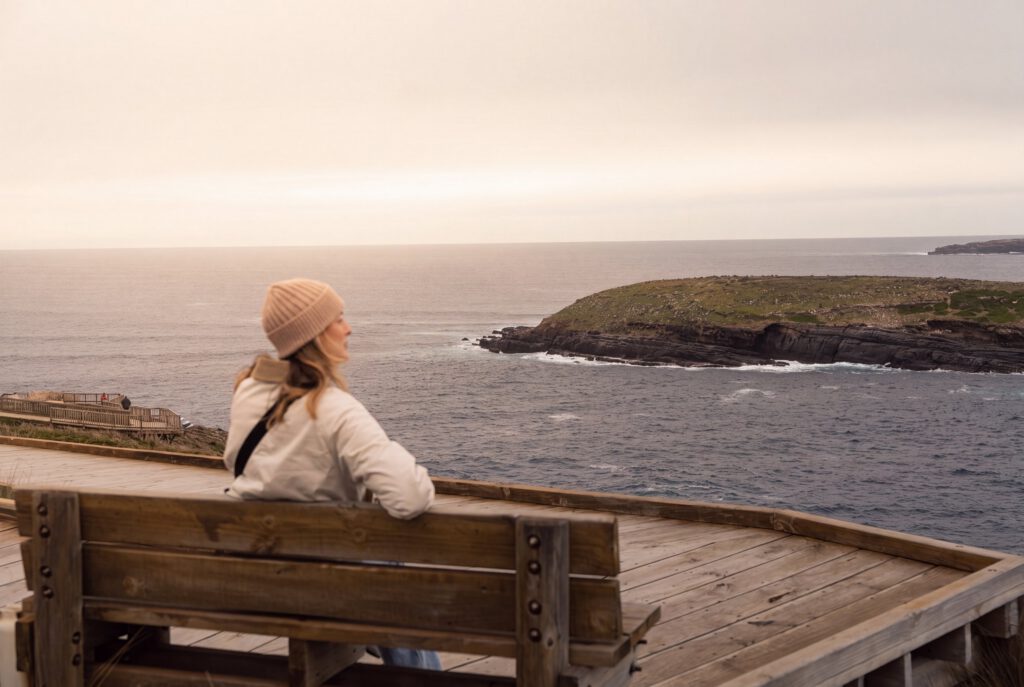
Flinders Chase takes up the western end of the island. Much of it burned in the 2019–20 bushfires, and what struck us was how much has come back: new growth everywhere and wildlife along the roads.
Flinders Chase National Park
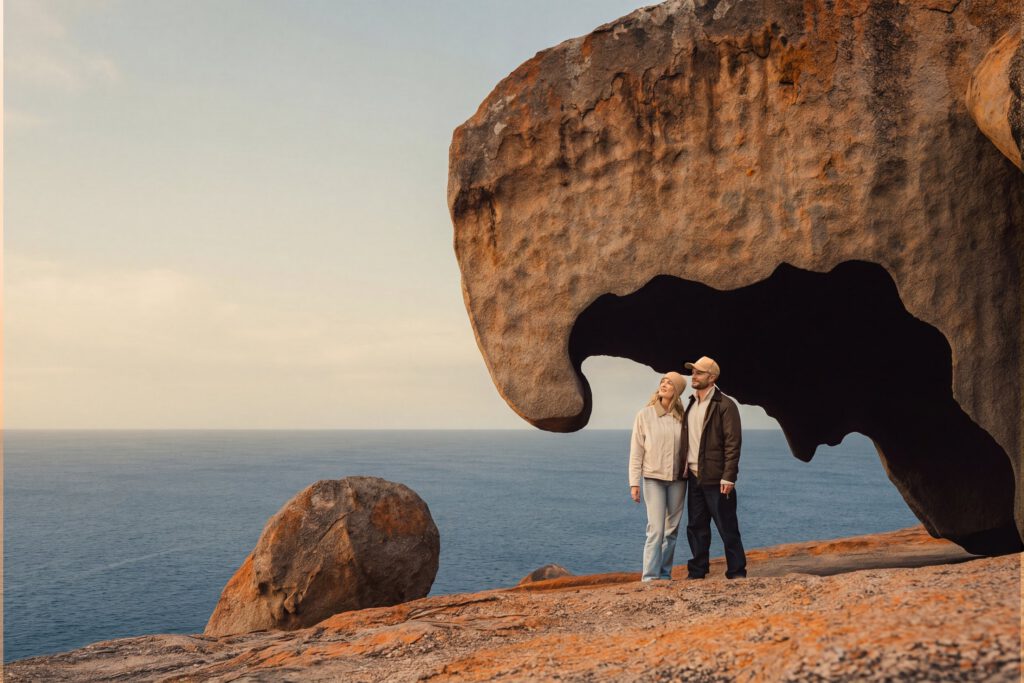
Remarkable Rocks
Huge granite boulders balanced on a headland above the Southern Ocean, worn into curves by wind and sea over millions of years.
Photos don’t show the scale. You need to stand underneath them.
Flinders Chase National Park
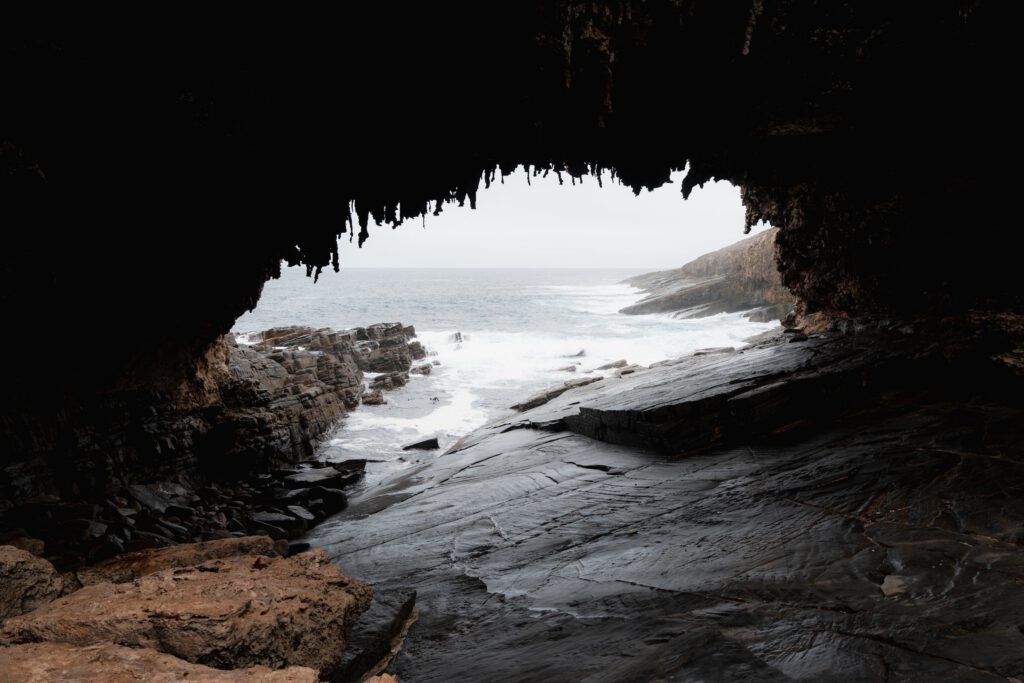
Admirals Arch
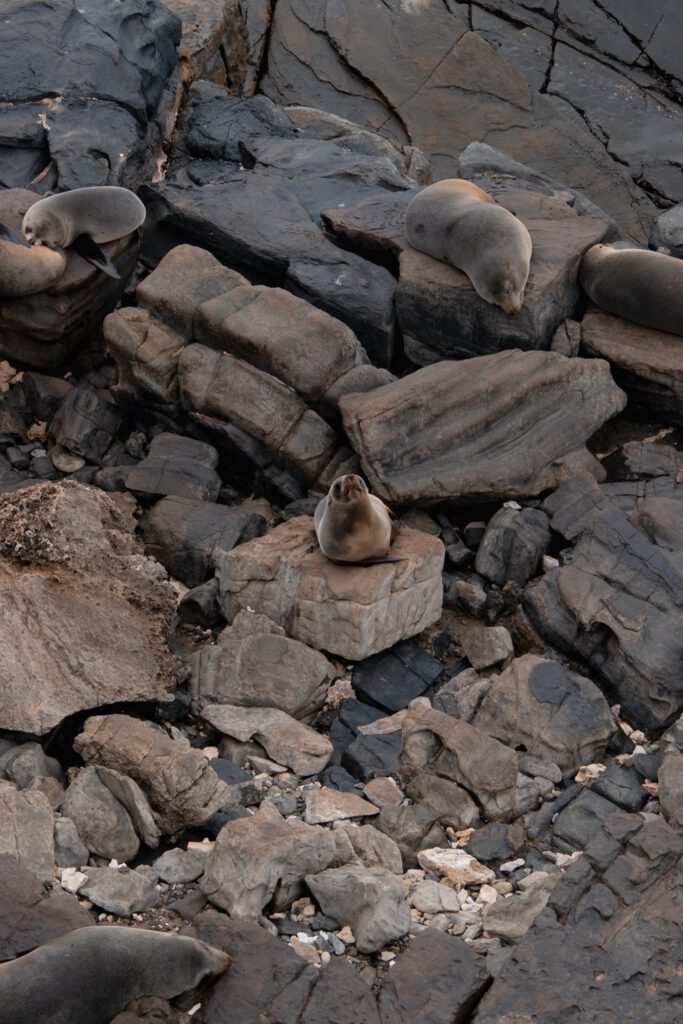
A boardwalk winds down the cliff to a natural rock arch, with long-nosed fur seals on the rocks below.
Watching them was a highlight for us.
Flinders Chase National Park
Cape du Couedic Lighthouse
The lighthouse stands above the Southern Ocean, close to Admirals Arch.
The road in is a good one for spotting wildlife, so take it slowly. The scenery between the stops is as good as the stops themselves.
Seal Bay Conservation Park
Home to a wild colony of endangered Australian sea lions.
There are two ways to see them: a ranger-guided tour that takes you down onto the beach, or a self-guided boardwalk to a viewing platform. Check times and book with Parks SA.
Stokes Bay
On the north coast. You reach the beach through a narrow passage in the rocks, which opens onto a sheltered bay with white sand and rock pools. If the entrance looks wrong, keep following the signs. Stay for sunset if you can.
Vivonne Bay
A long stretch of white sand and clear water on the south coast, between Seal Bay and Flinders Chase. Good for a beach walk or a picnic lunch on a driving day.
Penneshaw
The seaside town where the ferry lands. It’s a relaxed spot for a coffee and a look at the coast before you set off, and a handy base for your first or last night.
Wildlife on Kangaroo Island
The wildlife was one of the biggest reasons we loved Kangaroo Island. We’d see animals around where we were staying, beside the road and in the national park, often when we weren’t looking for them.
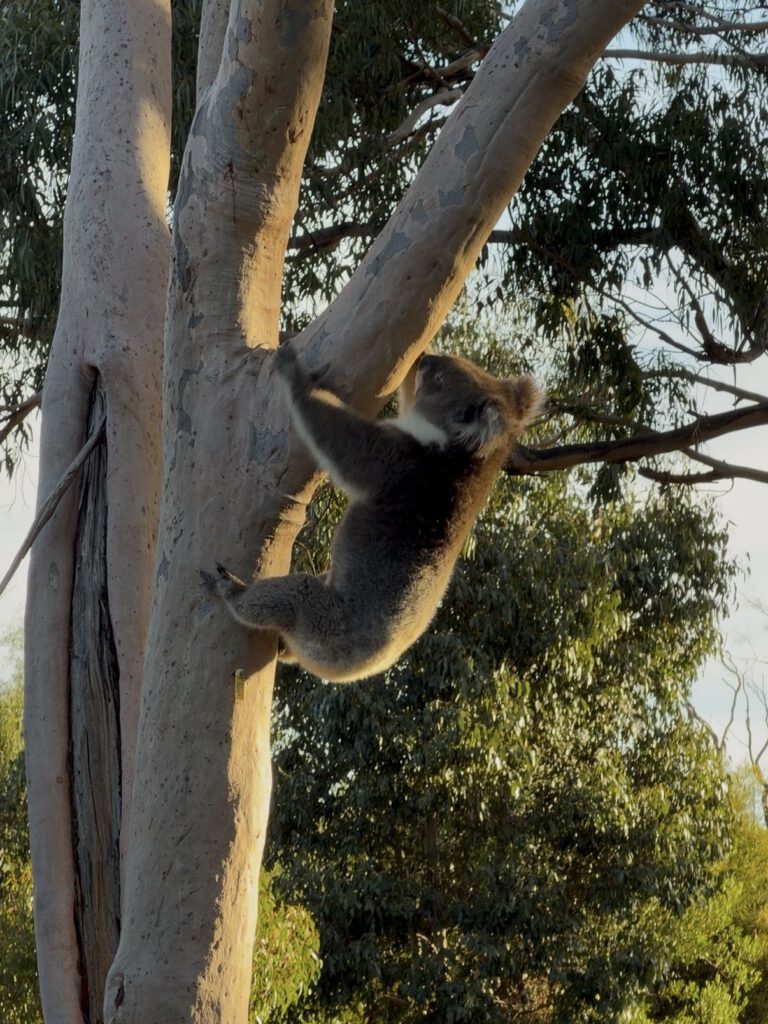
What you might see:
- Kangaroos, koalas and echidnas, right across the island
- Long-nosed fur seals at Admirals Arch
- Australian sea lions at Seal Bay
- Platypus in the waterholes of Flinders Chase
- Plenty of birdlife
Give them space, and slow right down on the roads at dawn and dusk.
Where to eat and drink on Kangaroo Island
Leave room in the plan for eating and drinking. A lot of the island’s produce is sold where it’s made, at cellar doors and farm gates.
Dudley Wines is one of our favourites: wine, wood-fired pizza and a clifftop view.
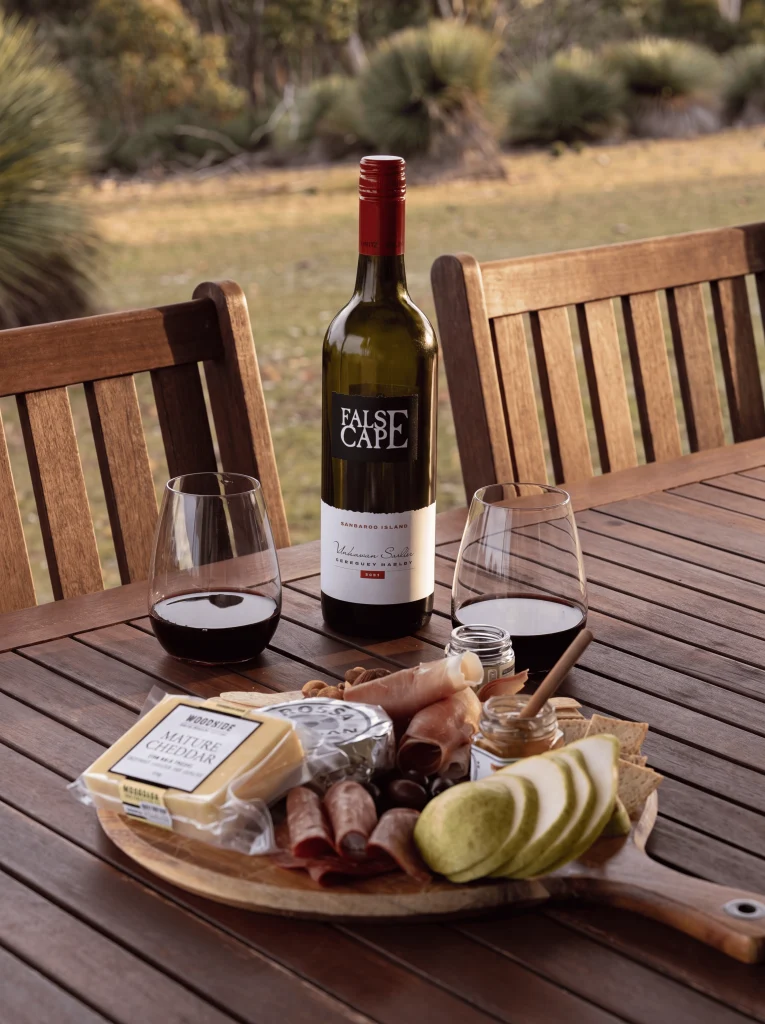
We also visited:
- False Cape Wines: a relaxed cellar door with local wines and regional produce.
- Clifford’s Honey Farm: honey from the island’s Ligurian bees, plus honey ice cream and mead.
- Emu Bay Lavender Farm: coffee, lunch and lavender scones.
- Kangaroo Island Brewery: craft beer, with food trucks and live music on selected days.
- The Oyster Farm Shop: local oysters by the water.
- Millie Mae’s Pantry: coffee, breakfast, burgers and baking in Penneshaw.
- Emu Ridge Eucalyptus Distillery: lunch and coffee, and a look at how eucalyptus oil is made.
Where to stay on Kangaroo Island
We stayed in two places and loved them both.
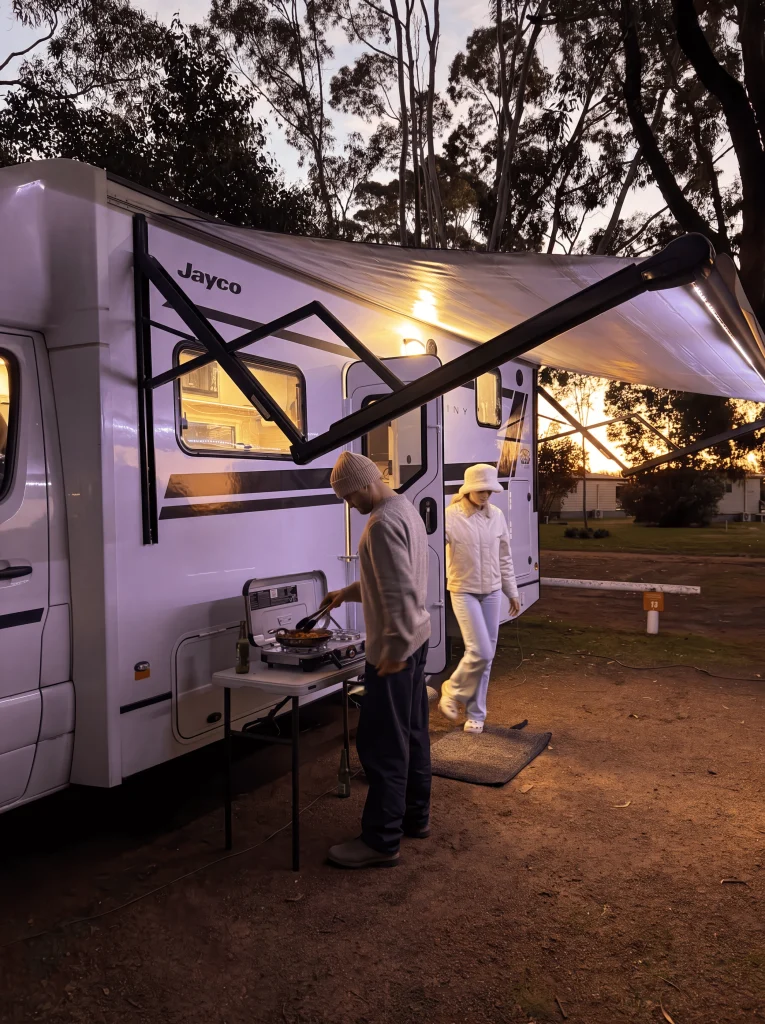
Discovery Parks Kangaroo Island is one of our favourite stays in South Australia. It’s set in native bushland on the western side of the island, which makes it a good base for Flinders Chase. Kangaroos grazed around the campground, and there were koalas in the trees a few metres from our site.
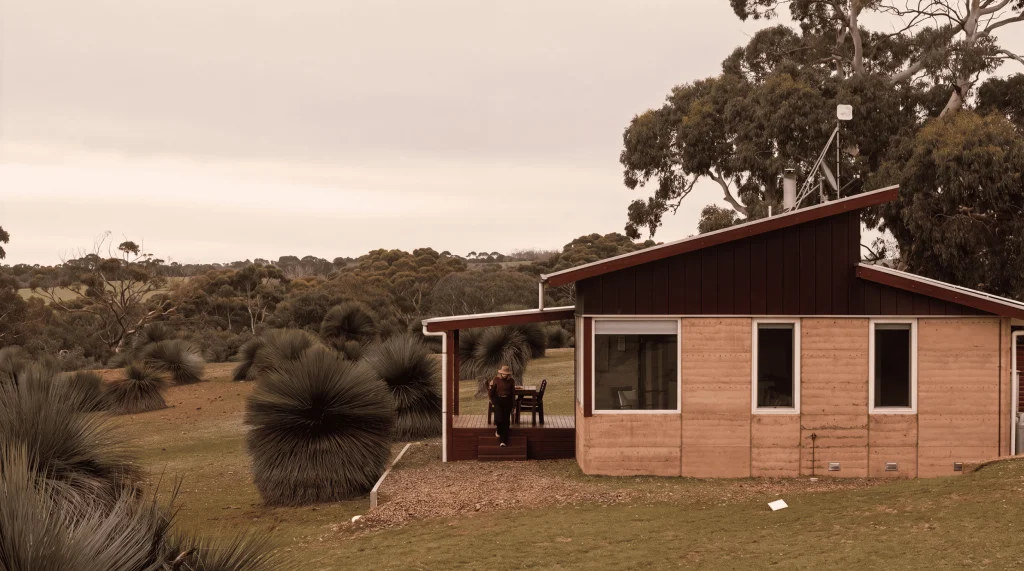
Ecopia Retreat is completely off-grid, with villas tucked into 150 acres of protected bushland. It feels peaceful and private, and the wildlife wanders past. Check availability at Ecopia Retreat.
Western Kangaroo Island
Discovery Parks Kangaroo Island
Set in native bushland on the western side of the island, close to Flinders Chase.
On our Kangaroo Island road trip
View on G’day Parks for Discovery Parks Kangaroo Island (opens in a new tab)
South Coast
Ecopia Retreat
Off-grid villas on 150 acres of protected bushland.
On our Kangaroo Island road trip
Penneshaw is the easy choice for a first or last night, close to the ferry. Wherever you stay, book early, especially if you need a site for a caravan or motorhome. Compare Kangaroo Island accommodation.
Places we haven’t been yet
We didn’t get to everything. These are on our list for next time, so we can’t tell you what they’re like first-hand.
Our tips for visiting Kangaroo Island
- Allow more time than you think. The island is bigger than it looks.
- Book the ferry and your accommodation early, especially with a caravan or motorhome.
- Check the pantry for honey and potatoes before you reach Cape Jervis.
- Don’t rush Flinders Chase.
- Plan your food stops, because some places keep limited or seasonal hours.
- Slow down at dawn and dusk, and give wildlife space.
Kangaroo Island FAQs
Can you take a motorhome or caravan to Kangaroo Island?
Yes. The SeaLink ferry takes cars, caravans and motorhomes. Longer vehicles are booked by their exact length, and you may be asked to reverse on.
Do you need a 4WD on Kangaroo Island?
No. The loop on our itinerary keeps to sealed roads, which reach Seal Bay, Flinders Chase, Stokes Bay and Penneshaw. Many smaller roads are unsealed, so check conditions before leaving the bitumen.
Do you need a pass for Flinders Chase National Park?
Yes. Entry is charged per person and can be paid online or at the visitor centre.
When is the best time to visit Kangaroo Island?
We’d suggest autumn, winter or spring, when it’s cooler and quieter.
Can you see koalas in the wild on Kangaroo Island?
Yes. We saw them in the trees at our campground, a few metres from our site.
Driving down from Adelaide
Bringing your own vehicle from Adelaide? This is the drive we’d suggest: down through the Fleurieu Peninsula to the ferry at Cape Jervis.